Wardrobe organization is more than just a trend; it’s a practical approach to managing your clothing and accessories in a way that makes your life easier. A well-organised wardrobe can save you time, reduce stress, and even help you rediscover pieces you may have forgotten about. When everything has its place, getting dressed becomes a more enjoyable experience rather than a daily chore.
In this article, we’ll explore various strategies for maximising your closet space, efficient folding and hanging techniques, and how to keep your wardrobe tidy throughout the year. Whether you have a small closet or a spacious dressing room, these tips will help you create a functional and aesthetically pleasing wardrobe.
If you’re looking to streamline your wardrobe organisation, you might also find it beneficial to explore how to enhance your workspace for maximum efficiency. An insightful article on transforming your workspace can be found here: Transform Your Workspace with a Leading Office Fit-Out Company. By applying similar principles of organisation and functionality in both your wardrobe and workspace, you can create a more productive and harmonious environment in your busy life.
Maximising closet space is essential, especially if you’re working with limited square footage. One effective way to start is by assessing what you have.
Take everything out of your closet and sort through your items.
This not only gives you a clear view of what you own but also allows you to identify pieces that you no longer wear or need. Once you’ve decluttered, consider using vertical space to your advantage.
Installing additional shelves or using hanging organisers can create more room for your belongings.
Another useful tip is to invest in slimline hangers. These take up less space than traditional hangers and can help keep your clothes from slipping off. Additionally, think about using the back of your closet door for extra storage. Hooks or over-the-door racks can hold accessories, bags, or even shoes, freeing up valuable shelf space for other items. By being strategic about how you use your closet, you can create a more organised and functional space.

Folding and hanging clothes properly can significantly impact how much space you have and how quickly you can find what you need. For instance, the Marie Kondo folding method is popular for a reason: it allows you to see all your items at a glance when stored vertically in drawers. This technique involves folding clothes into small rectangles that stand upright, making it easy to grab what you want without disturbing the rest.
When it comes to hanging clothes, consider grouping similar items together—like all your shirts or trousers—so you can find what you need quickly. Use cascading hangers for items like skirts or dresses to save space while keeping them wrinkle-free. Additionally, for delicate fabrics, consider using padded hangers to maintain their shape and prevent damage. These small adjustments can save you time during your morning routine and keep your wardrobe looking neat.
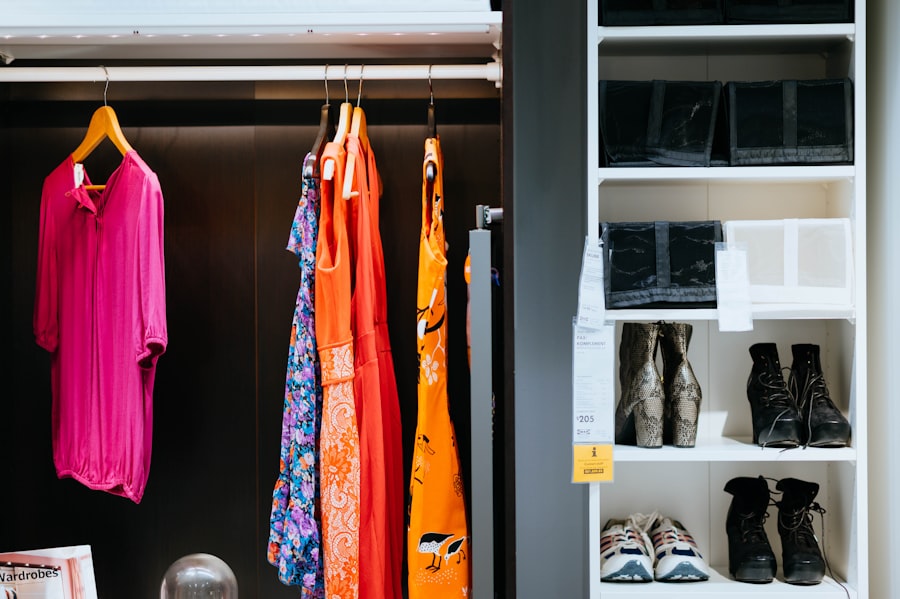
Seasonal rotation is an effective way to keep your wardrobe manageable throughout the year. As the seasons change, so do our clothing needs. Storing away off-season items not only frees up space but also makes it easier to access the clothes you’ll wear regularly. Invest in clear storage bins or vacuum-sealed bags for out-of-season clothing; this keeps them protected from dust and moisture while allowing you to see what’s inside.
When rotating your wardrobe, take the opportunity to reassess each item. If something hasn’t been worn in the past year, it might be time to let it go. Labeling storage bins by season or type of clothing can also streamline the process when it’s time to switch things up again. This way, when summer rolls around, you’ll know exactly where to find your shorts and sundresses without rummaging through winter coats.
If you’re looking to streamline your daily routine, you might find inspiration in our article on wardrobe organisation hacks for busy lives. These tips can help you maximise your space and minimise stress, allowing you to find what you need quickly. For more insights on creating efficient and stylish storage solutions, check out this related piece on commercial storage options that can transform any area into a functional haven.
Shoes and accessories often take up more space than we realise, so having a dedicated organisation system is crucial. For shoes, consider using tiered shoe racks or clear boxes that allow you to see each pair at a glance. If floor space is limited, wall-mounted shelves can be an excellent alternative for displaying your favourite pairs while keeping them accessible.
Accessories can be just as tricky to manage. A simple solution is to use small bins or trays for items like belts, scarves, and jewellery. Hanging organisers with pockets can also be useful for storing smaller accessories while keeping them visible. For necklaces and bracelets, consider using a pegboard or a decorative dish to prevent tangling. By creating designated spaces for shoes and accessories, you’ll not only save time but also enhance the overall look of your wardrobe.
For those looking to streamline their daily routines, exploring effective wardrobe organisation hacks can be invaluable. A well-organised wardrobe not only saves time but also enhances your overall efficiency. If you’re interested in transforming your space further, you might find this article on store fit-outs particularly useful, as it offers insights into optimising your environment for a more functional lifestyle. Embracing these strategies can make a significant difference in managing your busy life.
Outfit planning can be a game-changer when it comes to saving time in the morning. One effective strategy is to set aside a few minutes each week to plan your outfits for the upcoming days. This could involve laying out clothes on a designated rack or using a clothing app that allows you to mix and match pieces virtually.
Another approach is to create a capsule wardrobe—a collection of versatile pieces that can be easily mixed and matched. This simplifies decision-making and ensures that every item in your wardrobe works together cohesively. You might also consider keeping a “go-to” section in your closet for outfits that are tried-and-true favourites or those that require minimal effort to put together. By having these strategies in place, getting dressed becomes less of a hassle and more of an enjoyable part of your day.
Decluttering is an essential part of maintaining an organised wardrobe. A good rule of thumb is the “one in, one out” principle: for every new item you bring into your wardrobe, consider letting go of an old one. This helps prevent accumulation and keeps your collection manageable.
When deciding what to donate, ask yourself if you’ve worn an item in the past year or if it still fits well and reflects your style. If the answer is no, it might be time to part ways with it. Many charities accept clothing donations, so look for local organisations that align with causes you care about. Not only does this help others in need, but it also creates space in your wardrobe for pieces that truly resonate with you.
Once you’ve organised your wardrobe, maintaining its tidiness is key to long-term success. Regularly schedule time—perhaps once a month—to reassess your items and ensure everything is in its proper place. This could involve re-folding clothes that have become dishevelled or checking for any items that need mending or cleaning.
Additionally, make it a habit to put things back where they belong after wearing them. This simple practice can prevent clutter from building up over time. Consider implementing a “30-day rule” where if you haven’t worn something in that timeframe, it’s time to reconsider its place in your wardrobe. By staying proactive about maintenance, you’ll ensure that your wardrobe remains a functional and pleasant space for years to come.
In conclusion, effective wardrobe organization involves thoughtful planning and regular upkeep. By implementing these strategies—from maximising closet space to seasonal rotation—you can create a system that works for you and enhances your daily routine. With a little effort upfront, you’ll find that maintaining an organised wardrobe becomes second nature, allowing you to enjoy the process of getting dressed each day.
Some wardrobe organization hacks for busy lives include using slimline hangers to save space, using drawer dividers to keep items organized, and using storage bins or baskets to contain smaller items.
To make the most of limited wardrobe space, consider using vertical storage solutions such as hanging shelves or over-the-door organizers. Additionally, regularly decluttering and donating items you no longer wear can help free up space.
Some time-saving tips for maintaining a well-organized wardrobe include setting aside a specific time each week for tidying up, using labelled storage containers to easily locate items, and investing in a clothing steamer to quickly refresh garments.
Efficiently store seasonal clothing items by using vacuum-sealed storage bags to compress bulky items, rotating seasonal items to the front of your wardrobe for easy access, and storing off-season items in under-bed storage containers.
Practical ways to organize accessories in a wardrobe include using hooks or pegs to hang belts and scarves, using jewellery trays or organisers to keep accessories visible and untangled, and using clear storage containers for items such as sunglasses and hats.
Don’t Take Our Word For It
Aspec has recieved fantastic 5/5 Star Rating from its clients!
Professional from start to finish!
Wow! Omar was fantastic right from the very beginning! With 6 weeks to go until baby number 2s arrival, Omar delivered on his word to create a phenomenal outdoor kitchen for our alfresco area! It is exactly the vision we had in mind! We are so impressed with the workmanship and quality as well as the effort to get the work completed in such a tight timeframe. Very open and honest about pricing upfront also! Would highly recommend Omar and his team. The level of professionalism, honesty, workmanship and quality was spot on and always has time to discuss and go through any questions or concerns. Thank you A Spec Joinery for doing a fantastic job and in the short time we had to do it by! Particularly fitting us in a busy December!
Bianca M Vucetic
Professional from start to finish!
Great attentions to detail very informative throughout highly reccomend!
Mark, Double Bay
Professional from start to finish!
Omar installed a new kitchen for us. The process was easy and Omar kept in contact with us at all stages. The kitchen was installed in only a couple of days and looks fantastic. We’re very happy with the result.
Mat Pal
Professional from start to finish!
Omar was excellent to deal with. He and his team built and installed a large built-in wardrobe and cupboard, giving us good advice on the design. He was very professional in surveying the complex space for the units – it’s an older house with uneven floor and ceiling – and in preparing the design. His team constructed the units off-site within the time he indicated. Installation was complex and went very smoothly. The whole project was on time and on budget and the product delivered was of the highest quality. We would certainly use him again and recommend him to our friends.
Phillip Hart
Professional from start to finish!
Omar was fantastic to deal with and produced outstanding quality work for our new storage cupbaords and floating shelves. The final product was exactly what we wanted and made with care and attention. We highly recommend him for joinery and cabinetry works. Many thanks, Vince
Vincent Banton
Professional from start to finish!
Omar and his team are awesome. Professional, efficient and really went the extra mile creating beautiful joinery for my studio. Will definitely engage their services again and refer to anyone.
Carla Sconce
Professional from start to finish!
Dealt with Omar from A Spec on our office fit out, all work was done ahead of time and costs were maintained the whole way through. Would happily use A Spec again or recommend to anyone without hesitation.
Emanuel Karantonis
Professional from start to finish!
My experience with Omar and his team has been amazing and trouble-free.
Omar’s attention to detail and quick response time gave me comfort and confidence that the end product would be great.
Being in the construction industry, I couldn’t fault their workmanship and timing. Everything delivered on time and on budget.
Would definitely use Aspec Joinery again.
Ben Yee
Professional from start to finish!
Omar and the team at A Spec Joinery built our kitchen and bookshelves in 2021. The work is really high quality. It’s now 2024 and everything still looks great and functions just like the day they were built. I would highly recommend A Spec, particularly for the after build service. Nothing is too much trouble for Omar.
Alistair McLean
Professional from start to finish!
Omar and his team have worked wonders on all our joinery for our renovation, they constantly went above and beyond during all aspects of the build from planning to manufacturing and installation.
They have done an absolutely beautiful job and it is my pleasure to recommend A-Spec joinery to everyone.
Their professional attitude was exemplary and it was always lovely having Omar and the team in our house, they made an extremely stressful renovation into a positive experience.
A-Spec Joinery made our dreams come true and there are no words that can express how appreciative we are and so happy that we chose them.
If you want the best go with A-Spec Joinery.
Vincent & Anna
Vincent Jones
Professional from start to finish!
Paul Casey
Professional from start to finish!
Matt B
Professional from start to finish!
Our experience with A Spec Joinery was outstanding. We were happy with every phase of our project from initial concept to drawings to finished products. Omar and his team’s attention to detail was fantastic. Highly recommend!!!
Sharon Antonir
Professional from start to finish!
High quality work, on time on budget very professional would engage their services again 100%. 2yrs on asked Omar for additional work and once again very professional, on time and very helpful.
Maurice Natoli