In the realm of interior design, the significance of personalised design cannot be overstated. Personalisation transforms a mere living space into a sanctuary that reflects the unique tastes, preferences, and lifestyles of its inhabitants. When individuals engage in the design process, they are not merely selecting colours and furnishings; they are curating an environment that resonates with their identity.
This bespoke approach fosters a sense of belonging and comfort, as every element within the space tells a story about its occupants. For instance, a family may choose to incorporate heirloom furniture pieces that evoke cherished memories, while a young professional might opt for sleek, modern aesthetics that mirror their dynamic lifestyle. Moreover, personalised design extends beyond aesthetics; it encompasses functionality tailored to the specific needs of the residents.
A family with young children may prioritise durable materials and child-friendly layouts, while a couple who enjoys entertaining might focus on open-plan spaces that facilitate social interaction. This level of consideration ensures that the home is not only visually appealing but also practical and conducive to daily life. By investing in personalised design, homeowners can create spaces that evolve with them, adapting to changing needs and preferences over time.
High-end materials such as granite, hardwood, and premium metals not only enhance the aesthetic appeal but also contribute to the longevity and durability of the design. For example, marble worktops in a kitchen not only exude luxury but also offer resilience against heat and scratches, making them a practical choice for culinary enthusiasts.
Similarly, solid oak flooring adds warmth and elegance while providing a robust surface that withstands the rigours of daily life. In addition to their visual impact, high-end finishes elevate the overall experience of a space. Textured wall coverings, artisanal tiles, and bespoke cabinetry can transform ordinary rooms into extraordinary environments.
The tactile quality of these materials invites interaction, encouraging occupants to engage with their surroundings on a deeper level. Furthermore, the use of sustainable materials is becoming increasingly prevalent, as homeowners seek to minimise their environmental footprint while still achieving a luxurious aesthetic. By selecting high-end materials and finishes, individuals can create spaces that are not only beautiful but also enduring and environmentally conscious.
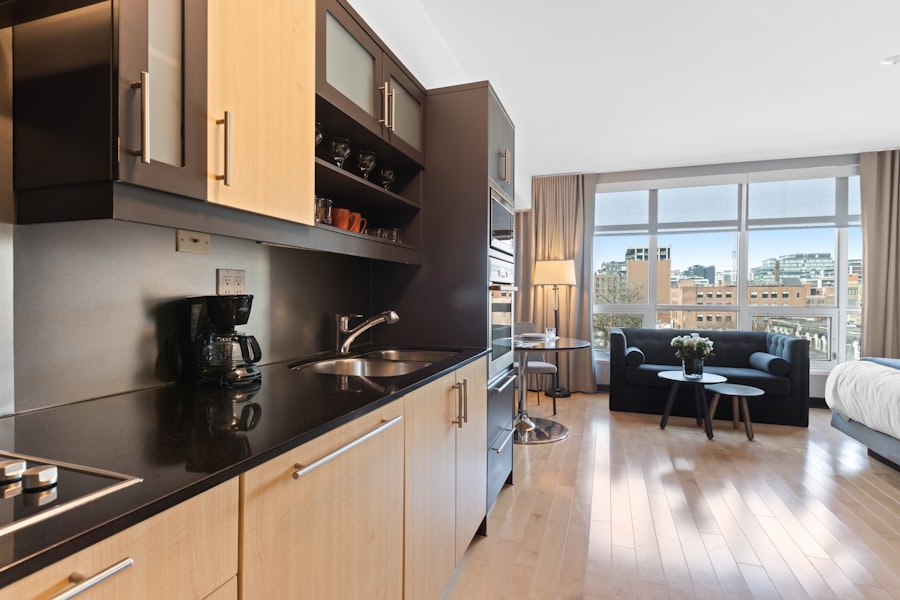
A well-thought-out layout is essential for maximising the functionality of any space. Customised layouts allow homeowners to optimise their environments according to their specific needs and lifestyle preferences. For instance, an open-plan living area can facilitate social gatherings and family interactions, while designated zones for cooking, dining, and relaxation can enhance the overall flow of the home.
This thoughtful arrangement ensures that each area serves its intended purpose without compromising on comfort or style. Moreover, customised layouts can address unique challenges posed by the architecture of a home. In properties with irregular shapes or limited square footage, innovative design solutions can create the illusion of space while maintaining functionality.
For example, incorporating built-in furniture or multi-purpose pieces can maximise storage and usability without overwhelming the visual landscape. By prioritising customised layouts, homeowners can create environments that are not only aesthetically pleasing but also tailored to their everyday activities and routines.
The integration of innovative appliances and technology has revolutionised modern living spaces, enhancing both convenience and efficiency. Smart home technology allows homeowners to control various aspects of their environment—from lighting and temperature to security systems—through intuitive interfaces or voice commands. For instance, smart thermostats can learn user preferences over time, optimising energy consumption while ensuring comfort.
This level of automation not only simplifies daily tasks but also contributes to energy efficiency, aligning with contemporary sustainability goals. In addition to smart technology, high-performance appliances have become essential components of modern kitchens and utility areas. Induction cooktops, for example, offer rapid heating capabilities while being energy-efficient and easy to clean.
Similarly, advanced refrigeration systems with humidity control can extend the freshness of produce, catering to health-conscious individuals who prioritise nutrition. By incorporating innovative appliances and technology into their designs, homeowners can create spaces that are not only functional but also aligned with contemporary lifestyles.
Lighting is a crucial element in interior design that can dramatically alter the mood and functionality of a space. Statement lighting fixtures serve as focal points that draw attention while providing essential illumination. From grand chandeliers in dining areas to sleek pendant lights over kitchen islands, these fixtures can enhance the overall aesthetic while serving practical purposes.
For instance, a well-placed floor lamp can create a cosy reading nook, inviting relaxation and leisure. Beyond mere aesthetics, lighting design should consider the layering of light sources to achieve versatility in ambiance. Combining ambient lighting with task and accent lighting allows homeowners to tailor the atmosphere according to different activities or times of day.
Dimmers can further enhance this flexibility by enabling users to adjust brightness levels based on their needs. By thoughtfully selecting statement lighting and fixtures, individuals can create dynamic environments that adapt to various moods and occasions.

In any home, effective storage solutions are paramount for maintaining organisation and minimising clutter. Bespoke storage solutions offer tailored approaches that cater specifically to the unique requirements of each household. Custom cabinetry designed to fit awkward spaces or built-in shelving units can maximise storage potential while seamlessly integrating into the overall design aesthetic.
Additionally, bespoke storage solutions can enhance accessibility and usability within a home. Pull-out drawers in kitchens or bathrooms allow for easy access to items without having to rummage through deep cabinets.
Similarly, modular shelving systems can be adjusted as needs change over time, providing flexibility for evolving lifestyles. By prioritising bespoke storage solutions, homeowners can create organised environments that promote efficiency and ease of living.
The incorporation of natural elements into interior design has gained significant traction in recent years as individuals seek to create calming environments that foster well-being. Natural materials such as wood, stone, and plants not only enhance aesthetic appeal but also contribute to a sense of tranquillity within a space. For instance, wooden beams or stone accents can evoke a connection to nature while adding warmth and texture to interiors.
Furthermore, biophilic design principles advocate for the integration of greenery within living spaces. Indoor plants not only purify the air but also bring life and vibrancy into otherwise sterile environments. Large windows that invite natural light can further enhance this connection by blurring the lines between indoor and outdoor spaces.
By embracing natural elements in their designs, homeowners can cultivate environments that promote relaxation and rejuvenation.
A cohesive design approach is essential for creating a seamless connection between different areas of a home. This continuity fosters an inviting atmosphere where each space flows harmoniously into the next. One effective strategy is to maintain a consistent colour palette throughout the home; this creates visual coherence while allowing for individual expression in each room.
For example, using complementary hues in adjacent spaces can tie them together while still allowing for distinct character. Additionally, architectural features such as archways or open doorways can enhance this sense of connection by encouraging movement between rooms. Thoughtful transitions—such as using similar flooring materials or repeating design motifs—can further reinforce this unity.
By prioritising seamless connections within their designs, homeowners can create environments that feel expansive and interconnected rather than disjointed or compartmentalised. In conclusion, personalised design is paramount in creating spaces that resonate with individual identities while prioritising functionality and aesthetics. The careful selection of high-end materials and finishes enhances both durability and visual appeal, while customised layouts ensure practicality tailored to specific lifestyles.
Bespoke storage solutions promote organisation without sacrificing style, while natural elements foster well-being through their calming presence. Finally, creating seamless connections throughout the home enhances cohesion and flow, resulting in an environment that feels both inviting and harmonious.
If you are looking to design a luxury kitchen that reflects your personal style, you may want to consider the latest trends in kitchen cabinets. Aspec Joinery has outlined 10 trending styles for kitchen cabinets in 2024, which can help you create a modern and stylish space. Whether you prefer sleek and minimalist designs or bold and colourful cabinets, there is a style to suit every taste. Additionally, Aspec Joinery also offers commercial fit-out services to transform business spaces for success. This article highlights the importance of creating a functional and aesthetically pleasing environment for your business. To learn more about these services, visit Aspec Joinery’s website.
Luxury kitchens are high-end, premium kitchen designs that are built with top-quality materials, advanced technology, and exquisite craftsmanship. They are often custom-designed to meet the specific needs and preferences of the homeowner.
Luxury kitchens typically feature high-end appliances, custom cabinetry, premium countertops, and luxurious finishes. They may also include advanced technology such as smart appliances, integrated lighting systems, and automated features.
Luxury kitchens are designed to reflect the homeowner’s personal style through customisable options such as cabinetry finishes, countertop materials, hardware, and lighting. Designers work closely with homeowners to create a kitchen that reflects their individual taste and lifestyle.
Popular styles for luxury kitchens include modern, contemporary, traditional, and transitional designs. Each style offers a unique aesthetic and can be customised to reflect the homeowner’s personal taste and preferences.
Investing in a luxury kitchen can add value to your home, enhance your cooking and entertaining experience, and provide a beautiful and functional space for daily living. Luxury kitchens are also built to last, with high-quality materials and craftsmanship that can withstand the test of time.
Don’t Take Our Word For It
Aspec has recieved fantastic 5/5 Star Rating from its clients!
Professional from start to finish!
Wow! Omar was fantastic right from the very beginning! With 6 weeks to go until baby number 2s arrival, Omar delivered on his word to create a phenomenal outdoor kitchen for our alfresco area! It is exactly the vision we had in mind! We are so impressed with the workmanship and quality as well as the effort to get the work completed in such a tight timeframe. Very open and honest about pricing upfront also! Would highly recommend Omar and his team. The level of professionalism, honesty, workmanship and quality was spot on and always has time to discuss and go through any questions or concerns. Thank you A Spec Joinery for doing a fantastic job and in the short time we had to do it by! Particularly fitting us in a busy December!
Bianca M Vucetic
Professional from start to finish!
Great attentions to detail very informative throughout highly reccomend!
Mark, Double Bay
Professional from start to finish!
Omar installed a new kitchen for us. The process was easy and Omar kept in contact with us at all stages. The kitchen was installed in only a couple of days and looks fantastic. We’re very happy with the result.
Mat Pal
Professional from start to finish!
Omar was excellent to deal with. He and his team built and installed a large built-in wardrobe and cupboard, giving us good advice on the design. He was very professional in surveying the complex space for the units – it’s an older house with uneven floor and ceiling – and in preparing the design. His team constructed the units off-site within the time he indicated. Installation was complex and went very smoothly. The whole project was on time and on budget and the product delivered was of the highest quality. We would certainly use him again and recommend him to our friends.
Phillip Hart
Professional from start to finish!
Omar was fantastic to deal with and produced outstanding quality work for our new storage cupbaords and floating shelves. The final product was exactly what we wanted and made with care and attention. We highly recommend him for joinery and cabinetry works. Many thanks, Vince
Vincent Banton
Professional from start to finish!
Omar and his team are awesome. Professional, efficient and really went the extra mile creating beautiful joinery for my studio. Will definitely engage their services again and refer to anyone.
Carla Sconce
Professional from start to finish!
Dealt with Omar from A Spec on our office fit out, all work was done ahead of time and costs were maintained the whole way through. Would happily use A Spec again or recommend to anyone without hesitation.
Emanuel Karantonis
Professional from start to finish!
My experience with Omar and his team has been amazing and trouble-free.
Omar’s attention to detail and quick response time gave me comfort and confidence that the end product would be great.
Being in the construction industry, I couldn’t fault their workmanship and timing. Everything delivered on time and on budget.
Would definitely use Aspec Joinery again.
Ben Yee
Professional from start to finish!
Omar and the team at A Spec Joinery built our kitchen and bookshelves in 2021. The work is really high quality. It’s now 2024 and everything still looks great and functions just like the day they were built. I would highly recommend A Spec, particularly for the after build service. Nothing is too much trouble for Omar.
Alistair McLean
Professional from start to finish!
Omar and his team have worked wonders on all our joinery for our renovation, they constantly went above and beyond during all aspects of the build from planning to manufacturing and installation.
They have done an absolutely beautiful job and it is my pleasure to recommend A-Spec joinery to everyone.
Their professional attitude was exemplary and it was always lovely having Omar and the team in our house, they made an extremely stressful renovation into a positive experience.
A-Spec Joinery made our dreams come true and there are no words that can express how appreciative we are and so happy that we chose them.
If you want the best go with A-Spec Joinery.
Vincent & Anna
Vincent Jones
Professional from start to finish!
Paul Casey
Professional from start to finish!
Matt B
Professional from start to finish!
Our experience with A Spec Joinery was outstanding. We were happy with every phase of our project from initial concept to drawings to finished products. Omar and his team’s attention to detail was fantastic. Highly recommend!!!
Sharon Antonir
Professional from start to finish!
High quality work, on time on budget very professional would engage their services again 100%. 2yrs on asked Omar for additional work and once again very professional, on time and very helpful.
Maurice Natoli