Strategic design plays a pivotal role in shaping the trajectory of a business. At its core, it involves aligning design processes with broader business objectives to create products and services that resonate with customers while driving profitability. This approach goes beyond mere aesthetics; it encompasses functionality, user experience, and market positioning. By integrating design thinking into the strategic framework of a company, businesses can foster innovation and adaptability, which are crucial in today’s fast-paced market.
Moreover, strategic design helps organisations differentiate themselves from competitors. In an era where consumers are bombarded with choices, a well-thought-out design strategy can create a unique identity that captures attention and builds loyalty. This is not just about visual appeal; it’s about crafting an experience that reflects the brand’s values and meets the needs of its target audience. When executed effectively, strategic design can lead to enhanced customer satisfaction and ultimately, business success.
In exploring the concept of strategic design that supports business goals, it is essential to consider how effective design can enhance operational efficiency and customer engagement. A related article that delves into the practical applications of design in business is available at Aspec Joinery in Australia. This piece highlights the importance of tailored design solutions in achieving specific business objectives, showcasing real-world examples that illustrate the impact of strategic design on overall success.
For strategic design to be effective, it must be closely aligned with the overarching goals of the organisation. This alignment ensures that every design decision contributes to the company’s mission and vision. It requires a deep understanding of what the organisation aims to achieve—whether that’s increasing market share, enhancing customer engagement, or launching innovative products. By establishing clear design objectives that mirror these goals, businesses can create a cohesive strategy that drives results.
Additionally, this alignment fosters collaboration across departments. When design teams understand the organisational objectives, they can work more effectively with marketing, sales, and product development teams. This synergy not only streamlines processes but also ensures that everyone is working towards a common purpose. Regular communication and feedback loops between teams can help refine design objectives and keep them relevant as business goals evolve.

A user-centred approach is essential for ensuring that design efforts resonate with the target audience. By prioritising the needs and preferences of users, businesses can create products and services that are not only functional but also enjoyable to use. This approach involves conducting thorough research to understand user behaviours, pain points, and desires. Techniques such as surveys, interviews, and usability testing can provide valuable insights that inform design decisions.
Furthermore, integrating user feedback throughout the design process allows for iterative improvements. Rather than waiting until a product is fully developed to gather user input, involving users early on can lead to more relevant solutions. This ongoing dialogue helps businesses stay attuned to market trends and shifts in consumer preferences, ensuring that their offerings remain competitive and appealing.
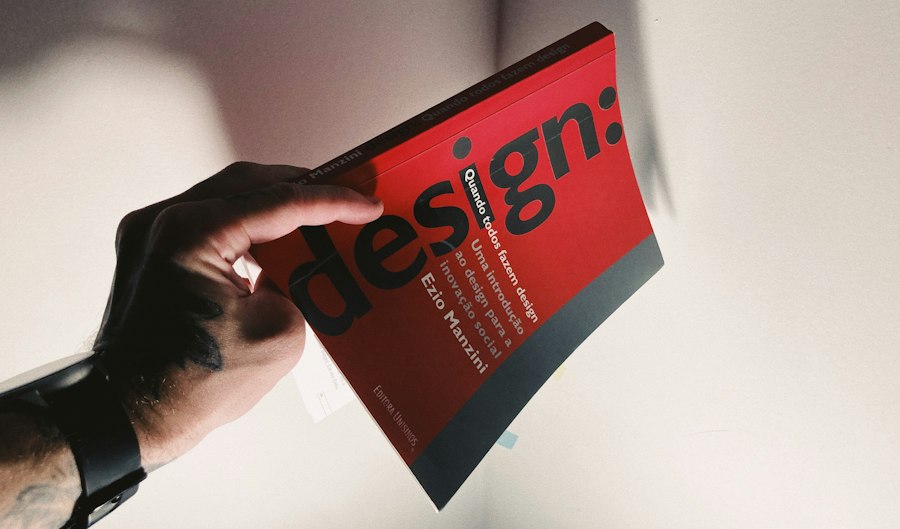
In today’s data-driven world, leveraging insights is crucial for making informed design decisions. Businesses have access to a wealth of data—from customer behaviour analytics to market research—that can guide their design strategies. By analysing this data, organisations can identify patterns and trends that inform everything from product features to marketing strategies.
Moreover, data can help validate design choices. For instance, A/B testing different design elements allows businesses to see which variations perform better in real-world scenarios. This empirical approach reduces the risk associated with design decisions and ensures that resources are allocated effectively. Ultimately, using data as a foundation for design not only enhances relevance but also boosts confidence in the decisions being made.
In the realm of strategic design, aligning creative processes with overarching business objectives is crucial for success. A related article that delves into the importance of integrating design thinking with business strategies can be found at ASPEC Joinery. This resource offers valuable insights into how effective design can not only enhance brand identity but also drive organisational growth, making it essential reading for anyone looking to understand the synergy between design and business goals.
Collaboration between design and business teams is essential for successful strategic design implementation. When these teams work in silos, opportunities for innovation can be missed, and projects may lack coherence. By fostering a culture of collaboration, organisations can harness diverse perspectives and expertise to create more robust solutions.
Regular workshops and brainstorming sessions can facilitate this collaboration. These gatherings encourage open dialogue where ideas can be shared freely without fear of criticism. Additionally, involving stakeholders from various departments early in the design process ensures that all viewpoints are considered, leading to more comprehensive solutions that address multiple facets of the business.
In the realm of strategic design that supports business goals, it is essential to consider how aesthetic choices can influence customer perceptions and engagement. A recent article discusses the importance of selecting the perfect bathroom vanity for your space, highlighting how thoughtful design can enhance both functionality and visual appeal. This aligns with the principles of strategic design, where every element is curated to meet specific business objectives. For more insights on this topic, you can read the article here: selecting the perfect bathroom vanity.
To truly understand the value of strategic design, businesses must establish metrics to measure its impact on performance. Key performance indicators (KPIs) such as customer satisfaction scores, conversion rates, and brand loyalty metrics can provide insights into how design influences overall business success. By tracking these metrics over time, organisations can assess whether their design strategies are yielding the desired results.
Furthermore, qualitative feedback from users can complement quantitative data. Conducting interviews or focus groups can reveal deeper insights into how users perceive the design and its effectiveness in meeting their needs. This combination of quantitative and qualitative analysis allows businesses to make informed adjustments to their design strategies, ensuring continuous improvement.
Implementing strategic design is not without its challenges. One common hurdle is resistance to change within an organisation. Employees may be accustomed to traditional ways of working and may be hesitant to embrace new design methodologies or processes. To overcome this resistance, it’s important to foster a culture that values innovation and encourages experimentation.
Training sessions and workshops can help equip teams with the necessary skills and knowledge to adopt strategic design practices confidently. Additionally, showcasing successful case studies within the organisation can inspire others to embrace change by demonstrating the tangible benefits of strategic design.
As we look ahead, several trends are emerging in strategic design that promise to support business growth. One notable trend is the increasing emphasis on sustainability in design practices.
Consumers are becoming more environmentally conscious, prompting businesses to consider eco-friendly materials and processes in their designs.
This shift not only meets consumer demand but also positions companies as responsible corporate citizens.
Another trend is the integration of technology into design processes. With advancements in artificial intelligence and machine learning, businesses can leverage these tools to enhance user experiences and streamline workflows. For instance, AI-driven analytics can provide real-time insights into user behaviour, allowing for more agile design iterations.
In conclusion, strategic design is an integral component of business success that requires careful alignment with organisational goals, a focus on user needs, data-driven decision-making, collaboration across teams, effective measurement of impact, overcoming implementation challenges, and staying attuned to emerging trends. By embracing these principles, businesses can harness the power of strategic design to drive innovation and growth in an ever-evolving marketplace.
Strategic design is an approach that aligns design processes and outcomes with the overarching goals of a business. It involves understanding the business context, identifying user needs, and creating solutions that not only enhance user experience but also drive business success. This approach ensures that design decisions contribute to the company’s objectives, such as increasing revenue, improving customer satisfaction, or enhancing brand reputation.
Strategic design supports business goals by ensuring that design initiatives are directly linked to the company’s objectives. By integrating design thinking into business strategy, organisations can create products and services that meet market demands, improve operational efficiency, and foster innovation. This alignment helps businesses to differentiate themselves in competitive markets and achieve sustainable growth.
The key components of strategic design include user research, market analysis, stakeholder engagement, and iterative prototyping. User research helps to identify the needs and preferences of target audiences, while market analysis provides insights into industry trends and competitive landscapes. Stakeholder engagement ensures that all relevant parties are involved in the design process, and iterative prototyping allows for testing and refining ideas before full implementation.
Yes, strategic design can be applied to all types of businesses, regardless of size or industry. Whether a startup or an established corporation, organisations can benefit from a design approach that prioritises alignment with business goals. The principles of strategic design can be tailored to suit various contexts, making it a versatile tool for enhancing product development, service delivery, and overall business strategy.
User experience (UX) plays a crucial role in strategic design as it focuses on creating products and services that are not only functional but also enjoyable and accessible for users. A positive user experience can lead to increased customer loyalty, higher conversion rates, and improved brand perception. By prioritising UX within the strategic design framework, businesses can ensure that their offerings resonate with users while also fulfilling business objectives.
Don’t Take Our Word For It
Aspec has recieved fantastic 5/5 Star Rating from its clients!
Professional from start to finish!
Wow! Omar was fantastic right from the very beginning! With 6 weeks to go until baby number 2s arrival, Omar delivered on his word to create a phenomenal outdoor kitchen for our alfresco area! It is exactly the vision we had in mind! We are so impressed with the workmanship and quality as well as the effort to get the work completed in such a tight timeframe. Very open and honest about pricing upfront also! Would highly recommend Omar and his team. The level of professionalism, honesty, workmanship and quality was spot on and always has time to discuss and go through any questions or concerns. Thank you A Spec Joinery for doing a fantastic job and in the short time we had to do it by! Particularly fitting us in a busy December!
Bianca M Vucetic
Professional from start to finish!
Great attentions to detail very informative throughout highly reccomend!
Mark, Double Bay
Professional from start to finish!
Omar installed a new kitchen for us. The process was easy and Omar kept in contact with us at all stages. The kitchen was installed in only a couple of days and looks fantastic. We’re very happy with the result.
Mat Pal
Professional from start to finish!
Omar was excellent to deal with. He and his team built and installed a large built-in wardrobe and cupboard, giving us good advice on the design. He was very professional in surveying the complex space for the units – it’s an older house with uneven floor and ceiling – and in preparing the design. His team constructed the units off-site within the time he indicated. Installation was complex and went very smoothly. The whole project was on time and on budget and the product delivered was of the highest quality. We would certainly use him again and recommend him to our friends.
Phillip Hart
Professional from start to finish!
Omar was fantastic to deal with and produced outstanding quality work for our new storage cupbaords and floating shelves. The final product was exactly what we wanted and made with care and attention. We highly recommend him for joinery and cabinetry works. Many thanks, Vince
Vincent Banton
Professional from start to finish!
Omar and his team are awesome. Professional, efficient and really went the extra mile creating beautiful joinery for my studio. Will definitely engage their services again and refer to anyone.
Carla Sconce
Professional from start to finish!
Dealt with Omar from A Spec on our office fit out, all work was done ahead of time and costs were maintained the whole way through. Would happily use A Spec again or recommend to anyone without hesitation.
Emanuel Karantonis
Professional from start to finish!
My experience with Omar and his team has been amazing and trouble-free.
Omar’s attention to detail and quick response time gave me comfort and confidence that the end product would be great.
Being in the construction industry, I couldn’t fault their workmanship and timing. Everything delivered on time and on budget.
Would definitely use Aspec Joinery again.
Ben Yee
Professional from start to finish!
Omar and the team at A Spec Joinery built our kitchen and bookshelves in 2021. The work is really high quality. It’s now 2024 and everything still looks great and functions just like the day they were built. I would highly recommend A Spec, particularly for the after build service. Nothing is too much trouble for Omar.
Alistair McLean
Professional from start to finish!
Omar and his team have worked wonders on all our joinery for our renovation, they constantly went above and beyond during all aspects of the build from planning to manufacturing and installation.
They have done an absolutely beautiful job and it is my pleasure to recommend A-Spec joinery to everyone.
Their professional attitude was exemplary and it was always lovely having Omar and the team in our house, they made an extremely stressful renovation into a positive experience.
A-Spec Joinery made our dreams come true and there are no words that can express how appreciative we are and so happy that we chose them.
If you want the best go with A-Spec Joinery.
Vincent & Anna
Vincent Jones
Professional from start to finish!
Paul Casey
Professional from start to finish!
Matt B
Professional from start to finish!
Our experience with A Spec Joinery was outstanding. We were happy with every phase of our project from initial concept to drawings to finished products. Omar and his team’s attention to detail was fantastic. Highly recommend!!!
Sharon Antonir
Professional from start to finish!
High quality work, on time on budget very professional would engage their services again 100%. 2yrs on asked Omar for additional work and once again very professional, on time and very helpful.
Maurice Natoli