A minimalist wardrobe offers numerous advantages that extend beyond mere aesthetics. One of the primary benefits is the reduction of decision fatigue. With fewer clothing options, individuals can streamline their daily routines, making it easier to choose outfits without the overwhelming feeling that often accompanies a bulging wardrobe. This simplification can lead to a more efficient morning routine, allowing for more time to focus on other important tasks or simply enjoy a leisurely start to the day.
Additionally, a minimalist wardrobe promotes financial savings. By investing in a select number of high-quality pieces rather than a multitude of cheaper items, individuals can reduce their overall spending on clothing. This approach encourages thoughtful purchasing decisions, leading to a more sustainable fashion practice. Over time, the cost of maintaining a minimalist wardrobe can be significantly lower than that of a traditional one, as it discourages impulse buys and promotes longevity in clothing choices.
If you’re looking to enhance your minimalist lifestyle, you might find inspiration in the article on maximising space with stylish built-in robes. This piece offers valuable design tips and ideas that can help you create a clutter-free environment while maintaining a chic aesthetic. For more insights, you can read the article here: Maximising Space with Stylish Built-In Robes: Design Tips and Ideas.
When curating a minimalist wardrobe, certain essential items should be prioritised to ensure versatility and functionality. A well-fitted pair of jeans is often considered a cornerstone of any minimalist collection. They can be dressed up or down, making them suitable for various occasions. Similarly, a classic white shirt serves as a versatile piece that can be paired with almost anything, from tailored trousers to casual shorts. These foundational items provide a solid base upon which to build an array of outfits.
In addition to jeans and shirts, a few key outerwear pieces are essential for adapting to different weather conditions. A tailored blazer can elevate casual looks while providing warmth during cooler months. A simple, well-constructed coat is also necessary for practicality and style. Footwear should not be overlooked; a pair of comfortable yet stylish shoes, such as loafers or ankle boots, can complement numerous outfits. By focusing on these essential items, individuals can create a cohesive wardrobe that meets their needs without excess.
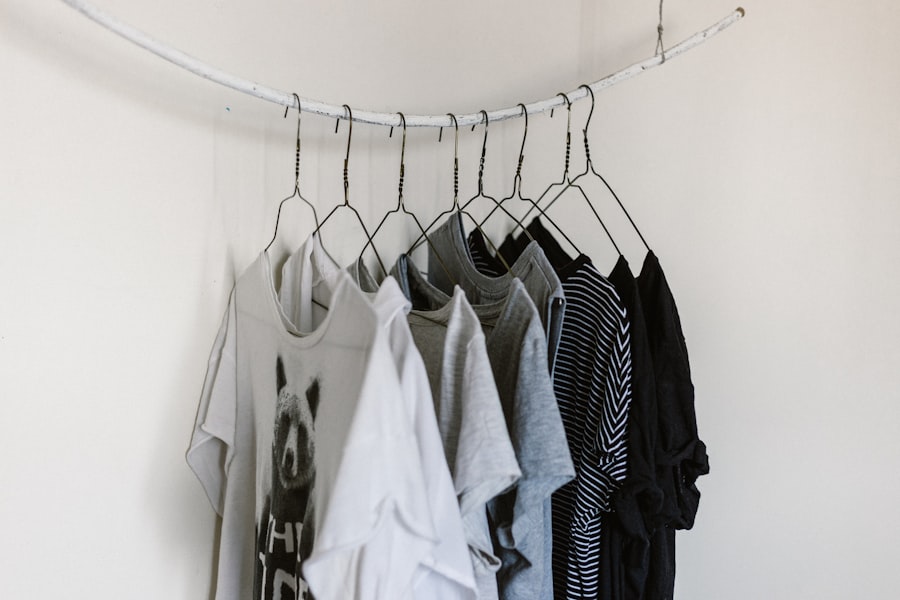
Decluttering and organising a closet is a crucial step in establishing a minimalist wardrobe. The process begins with an honest assessment of current clothing items. Individuals should take everything out of their closet and evaluate each piece based on its condition, fit, and frequency of wear. A useful guideline is the “one-year rule”: if an item has not been worn in the past year, it may be time to let it go. This method encourages individuals to part with items that no longer serve them, making space for more meaningful additions.
Once the decluttering process is complete, organising the remaining items becomes essential for maintaining a minimalist approach. Grouping clothing by category—such as tops, bottoms, and outerwear—can make it easier to locate specific pieces when needed. Additionally, arranging items by colour or season can enhance visual appeal and further streamline the selection process. Investing in quality hangers and storage solutions can also contribute to an organised closet that reflects a minimalist ethos.
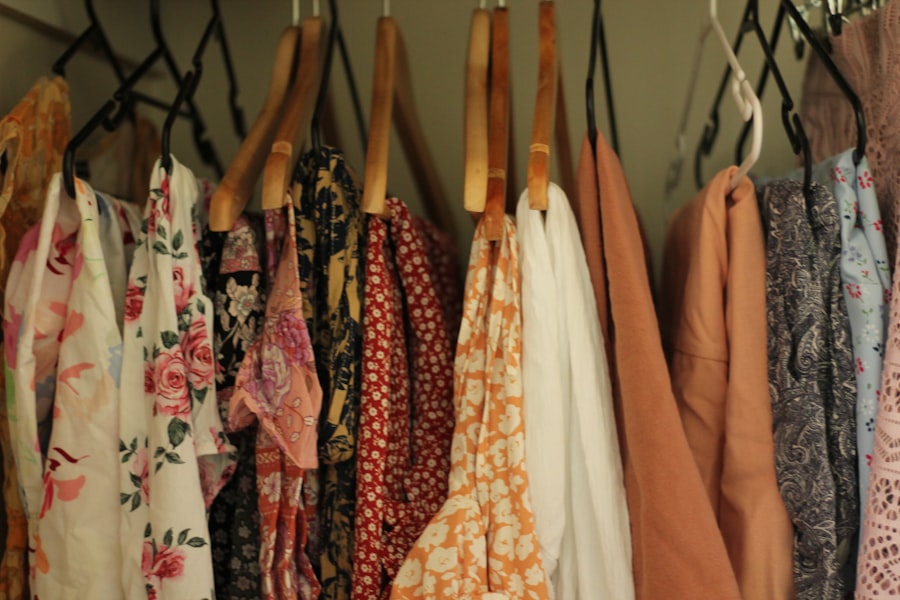
The ability to mix and match clothing items is fundamental to maximising the potential of a minimalist wardrobe. By selecting pieces that complement one another, individuals can create numerous outfits from a limited selection of clothing. Neutral colours often play a significant role in this process, as they tend to pair well with various shades and patterns. Incorporating a few statement pieces can also add interest without overwhelming the overall aesthetic.
Layering is another effective technique for creating versatile outfits. By combining different textures and lengths, individuals can adapt their looks for various occasions or weather conditions. For instance, pairing a lightweight turtleneck under a dress or adding a denim jacket over a simple dress can transform an outfit from casual to polished. This approach not only maximises the use of existing clothing but also encourages creativity in styling.
For those seeking inspiration on how to curate a stylish yet functional wardrobe that aligns with a minimalist lifestyle, exploring related concepts can be quite beneficial. A great resource to consider is an article on the importance of sustainable materials in home design, which complements the minimalist ethos beautifully. You can read more about it in this insightful piece on sustainable joinery. This connection not only enhances your wardrobe choices but also encourages a broader perspective on living simply and sustainably.
As awareness of environmental issues grows, many individuals are seeking ways to incorporate sustainable and ethical fashion into their wardrobes. A minimalist approach aligns well with these values, as it encourages thoughtful consumption and prioritises quality over quantity. When selecting new pieces, individuals should consider brands that prioritise sustainable materials and ethical production practices. This may include clothing made from organic cotton, recycled fabrics, or produced in fair-trade conditions.
Additionally, second-hand shopping presents an excellent opportunity to build a sustainable wardrobe while adhering to minimalist principles. Thrift stores and online resale platforms offer unique finds that can add character to any collection without contributing to fast fashion’s detrimental impact on the environment. By embracing pre-loved items, individuals not only reduce waste but also support a circular economy that values longevity and resourcefulness.
Maintaining a minimalist wardrobe requires ongoing commitment and mindfulness regarding clothing choices. One effective strategy is to adopt a “one in, one out” policy: for every new item purchased, an existing piece should be removed from the wardrobe. This practice helps prevent clutter from accumulating and encourages individuals to think critically about their purchases.
Regularly reassessing the wardrobe is also beneficial for maintaining minimalism. Seasonal evaluations can help identify items that are no longer worn or needed, allowing for timely decluttering. Furthermore, keeping track of what is worn most frequently can inform future purchasing decisions, ensuring that new additions align with personal style and lifestyle needs.
The concept of a capsule wardrobe is closely related to minimalism and offers a practical framework for those looking to simplify their clothing collections further. A capsule wardrobe typically consists of around 30-40 carefully selected pieces that can be mixed and matched throughout the season. This approach not only simplifies decision-making but also encourages creativity in outfit creation.
Creating a capsule wardrobe involves careful planning and consideration of personal style preferences and lifestyle requirements. Individuals should begin by identifying their most-worn items and determining which pieces are essential for their daily activities. By focusing on versatility and cohesion, individuals can curate a capsule wardrobe that reflects their unique style while adhering to minimalist principles.
Accessories play an important role in completing outfits within a minimalist wardrobe. However, the key is to choose accessories that are both functional and stylish without overwhelming the overall look. A few well-chosen pieces—such as a classic watch, simple jewellery, or a versatile handbag—can enhance an outfit without detracting from its simplicity.
Footwear is another area where minimalism can shine through. Investing in high-quality shoes that are comfortable yet stylish is essential for maintaining both practicality and aesthetics.
A small selection of footwear—such as trainers for casual outings, ankle boots for versatility, and perhaps a pair of elegant flats—can cater to various occasions while keeping the overall collection streamlined.
In conclusion, adopting a minimalist wardrobe offers numerous benefits ranging from reduced decision fatigue to financial savings and sustainability. By focusing on essential clothing items, decluttering effectively, mixing and matching outfits creatively, and incorporating ethical fashion practices, individuals can cultivate a wardrobe that reflects their values while remaining functional and stylish. Embracing minimalism in both clothing and accessories allows for greater freedom in personal expression while promoting a more sustainable approach to fashion consumption.
A minimalist wardrobe consists of a limited number of versatile, high-quality clothing items that can be mixed and matched easily. It focuses on simplicity, functionality, and timeless style rather than trends.
There is no strict number, but many minimalist wardrobes contain between 30 to 50 pieces, including tops, bottoms, outerwear, shoes, and accessories. The goal is to keep only what is necessary and loved.
Benefits include saving time when choosing outfits, reducing decision fatigue, lowering clothing expenses, minimising environmental impact, and promoting a clutter-free living space.
Begin by decluttering your current wardrobe, keeping only items you wear regularly and love. Invest in quality basics in neutral colours, choose versatile pieces, and avoid impulse purchases.
Neutral colours such as black, white, grey, navy, and beige are preferred for their versatility. Natural fabrics like cotton, wool, linen, and silk are often chosen for their durability and comfort.
Don’t Take Our Word For It
Aspec has recieved fantastic 5/5 Star Rating from its clients!
Professional from start to finish!
Wow! Omar was fantastic right from the very beginning! With 6 weeks to go until baby number 2s arrival, Omar delivered on his word to create a phenomenal outdoor kitchen for our alfresco area! It is exactly the vision we had in mind! We are so impressed with the workmanship and quality as well as the effort to get the work completed in such a tight timeframe. Very open and honest about pricing upfront also! Would highly recommend Omar and his team. The level of professionalism, honesty, workmanship and quality was spot on and always has time to discuss and go through any questions or concerns. Thank you A Spec Joinery for doing a fantastic job and in the short time we had to do it by! Particularly fitting us in a busy December!
Bianca M Vucetic
Professional from start to finish!
Great attentions to detail very informative throughout highly reccomend!
Mark, Double Bay
Professional from start to finish!
Omar installed a new kitchen for us. The process was easy and Omar kept in contact with us at all stages. The kitchen was installed in only a couple of days and looks fantastic. We’re very happy with the result.
Mat Pal
Professional from start to finish!
Omar was excellent to deal with. He and his team built and installed a large built-in wardrobe and cupboard, giving us good advice on the design. He was very professional in surveying the complex space for the units – it’s an older house with uneven floor and ceiling – and in preparing the design. His team constructed the units off-site within the time he indicated. Installation was complex and went very smoothly. The whole project was on time and on budget and the product delivered was of the highest quality. We would certainly use him again and recommend him to our friends.
Phillip Hart
Professional from start to finish!
Omar was fantastic to deal with and produced outstanding quality work for our new storage cupbaords and floating shelves. The final product was exactly what we wanted and made with care and attention. We highly recommend him for joinery and cabinetry works. Many thanks, Vince
Vincent Banton
Professional from start to finish!
Omar and his team are awesome. Professional, efficient and really went the extra mile creating beautiful joinery for my studio. Will definitely engage their services again and refer to anyone.
Carla Sconce
Professional from start to finish!
Dealt with Omar from A Spec on our office fit out, all work was done ahead of time and costs were maintained the whole way through. Would happily use A Spec again or recommend to anyone without hesitation.
Emanuel Karantonis
Professional from start to finish!
My experience with Omar and his team has been amazing and trouble-free.
Omar’s attention to detail and quick response time gave me comfort and confidence that the end product would be great.
Being in the construction industry, I couldn’t fault their workmanship and timing. Everything delivered on time and on budget.
Would definitely use Aspec Joinery again.
Ben Yee
Professional from start to finish!
Omar and the team at A Spec Joinery built our kitchen and bookshelves in 2021. The work is really high quality. It’s now 2024 and everything still looks great and functions just like the day they were built. I would highly recommend A Spec, particularly for the after build service. Nothing is too much trouble for Omar.
Alistair McLean
Professional from start to finish!
Omar and his team have worked wonders on all our joinery for our renovation, they constantly went above and beyond during all aspects of the build from planning to manufacturing and installation.
They have done an absolutely beautiful job and it is my pleasure to recommend A-Spec joinery to everyone.
Their professional attitude was exemplary and it was always lovely having Omar and the team in our house, they made an extremely stressful renovation into a positive experience.
A-Spec Joinery made our dreams come true and there are no words that can express how appreciative we are and so happy that we chose them.
If you want the best go with A-Spec Joinery.
Vincent & Anna
Vincent Jones
Professional from start to finish!
Paul Casey
Professional from start to finish!
Matt B
Professional from start to finish!
Our experience with A Spec Joinery was outstanding. We were happy with every phase of our project from initial concept to drawings to finished products. Omar and his team’s attention to detail was fantastic. Highly recommend!!!
Sharon Antonir
Professional from start to finish!
High quality work, on time on budget very professional would engage their services again 100%. 2yrs on asked Omar for additional work and once again very professional, on time and very helpful.
Maurice Natoli